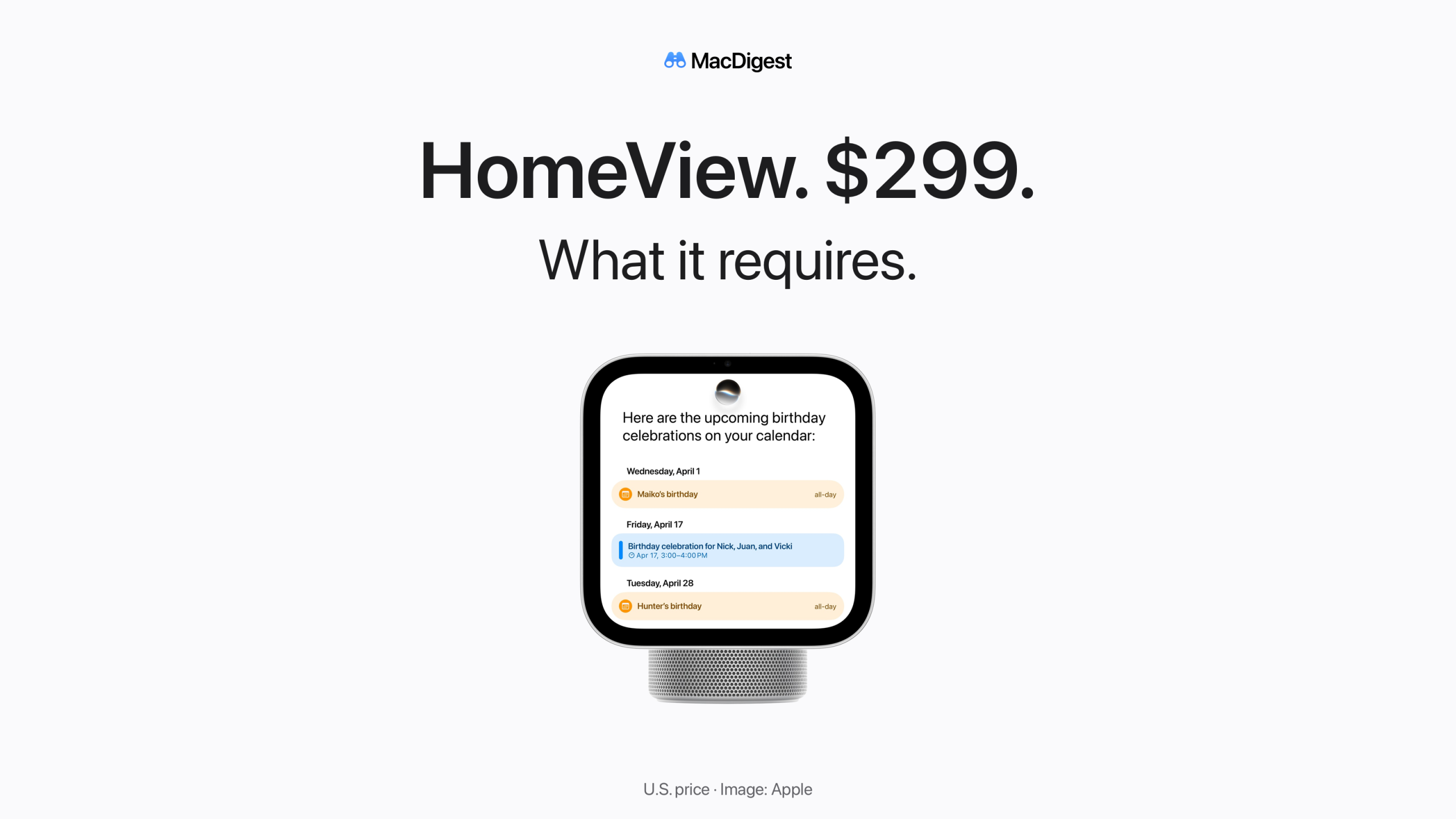
Apple’s new HomeView costs $299 in the U.S. in both tabletop and wall-mounted form, with availability beginning November 13. The two models have different installation costs, while the shared screen’s most personal features depend on the devices each person already owns. Those details deserve a look before ordering. [1]
The paired device still matters
HomeView has an A18 chip, a 7-inch display and a 12MP Center Stage camera. Its system requirements list an iPhone running iOS 27.2 or later, or an iPad running iPadOS 27.2 or later, plus Wi-Fi internet access. [2]
Apple says Siri AI’s general knowledge, natural conversations and music discovery also work for people without an Apple Intelligence-enabled iPhone or iPad. Personal-context requests need a paired, Apple Intelligence-capable device with Siri AI enabled. [1, 3]
That creates a practical distinction for mixed-device households. Guests can control accessories, check the weather, set timers and play music. A full personalized experience requires an Apple Account, a compatible iPhone or iPad and membership in the shared home. HomeView recognizes up to six people. Buying one screen therefore does not give every visitor the same personal assistant experience. [3]
Expressive Siri voices have a narrower hardware requirement: iPhone 17 Pro models, iPhone Air, iPhone 18 Pro models, iPhone Duo, or an M4-or-later iPad with at least 12GB of memory. An iPhone can support Apple Intelligence without qualifying for every voice feature. [2, 4]
Privacy affects everyday access
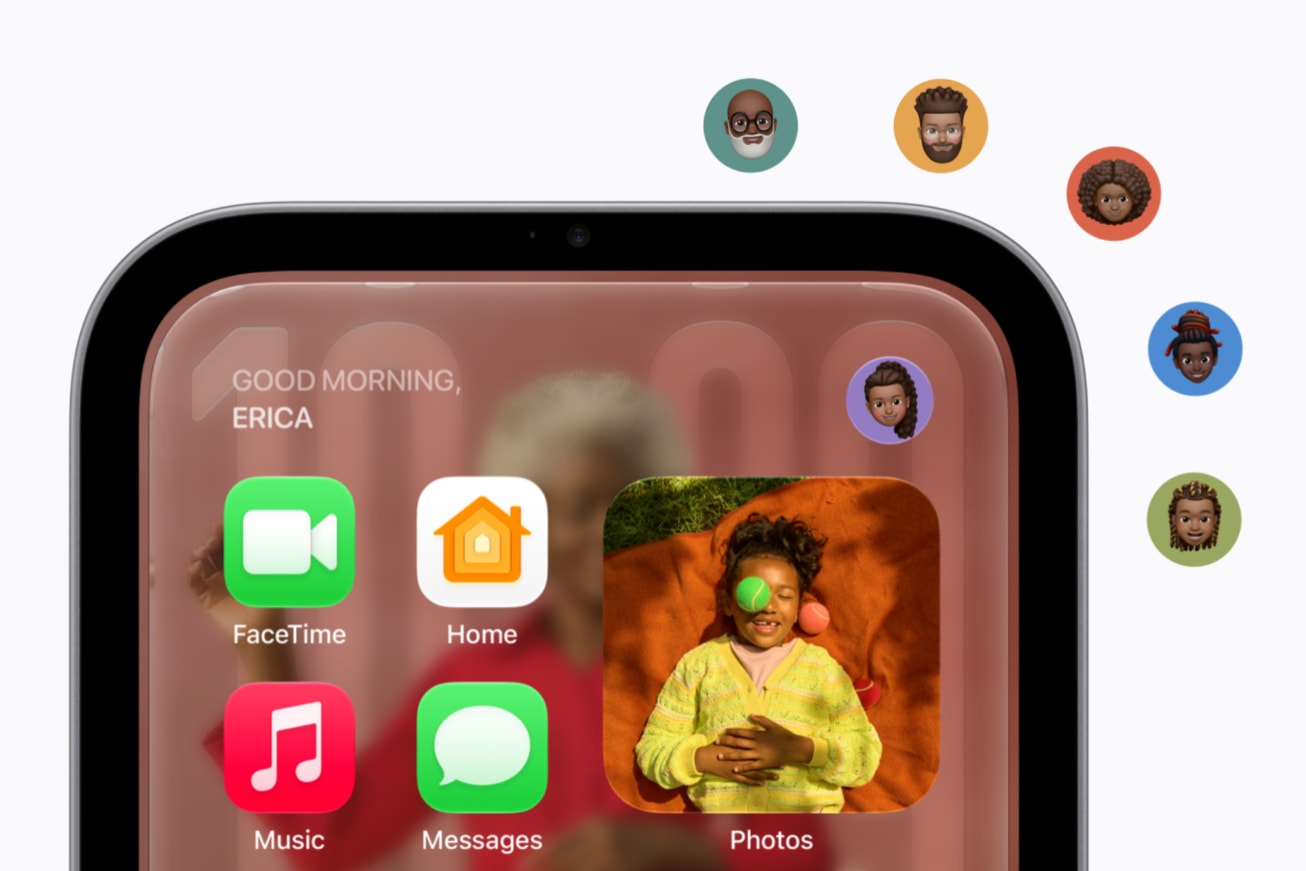
Personal Messages and Calendar content normally appears after HomeView recognizes the enrolled person’s face and their paired iPhone or iPad is on the same Wi-Fi network and has recently been unlocked. Apple says Secure Exclaves isolate the camera and microphone processing used for recognition from the operating system. [3]
There is a qualified exception: personal information may remain accessible after the paired device leaves Wi-Fi if it was recently on that network, still has cellular connectivity, remains in the same location and was recently unlocked, with the user still recognized by face. [1]
The implication is that personal access depends on both identity and the paired device’s state. A useful real-world test will be how smoothly that works as different people approach the display. The announcement does not establish recognition reliability or how long “recently unlocked” lasts.
AI access has its own conditions
Apple labels Siri AI on HomeView a beta in software version 27.2. Its footnote says certain server-side Apple Intelligence features have daily usage limits, with expanded access offered for a fee in the future. The reviewed pages do not give a price or numerical daily allowance. [2, 5]
Apple’s usage terms say a feature may become unavailable or limited until its allowance resets, while other device features remain usable. Buyers should not interpret the hardware price as a promise of unlimited future server-based AI use. Equally, the announcement does not say a paid Siri plan is required to use HomeView at launch. [6]
Camera monitoring has a separate subscription consideration. AI video summaries require setup using an Apple Intelligence-enabled iPhone or iPad and an eligible iCloud+ plan. Apple’s support page lists summaries for up to one camera on the 2TB plan, two on 6TB and five on 12TB. That is a different allowance from the HomeView interface’s ability to display nine live camera feeds. [1, 3, 5]
The wall model needs a fuller budget
The tabletop model includes a 30W adapter and USB-C cable. The wall-mounted model requires separately purchased mounting and power hardware, and both require wired power. [2]
Schneider Home’s USB-C wall connector starts at $59.95, while its AC-wired mount starts at $79.95. A $129.95 Power over Ethernet mount is scheduled for early 2027. Installation can therefore change the cost and timing of a wall-based setup. [1]
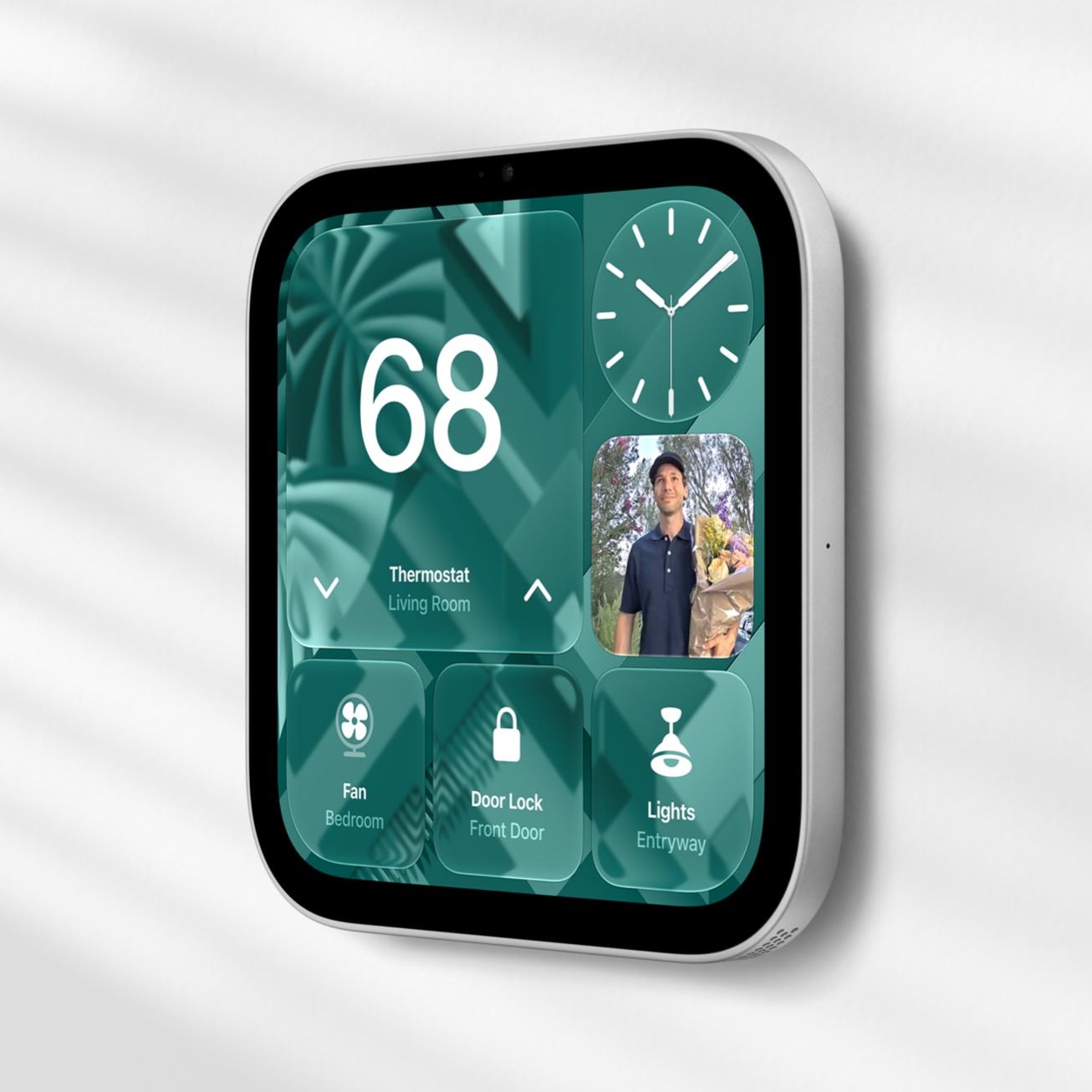
Existing HomeKit and Matter accessories remain part of the proposition. The new Apple Home Collection starts arriving in December, with selected accessories following in early 2027, so building around that entire collection means a staggered rollout. [7]
The last check is location and language. HomeView launches with English Siri AI in eight countries, including the U.S., UK, Canada and India. Canadian French support is promised later. Apple says HomeView will not be sold in the EU while Siri AI remains unavailable there on iOS. [1, 7]
For a household already using compatible Apple devices and home accessories, HomeView could put shared controls and individual information within easy reach. The sensible buying decision starts with the people, phones, subscriptions and installation already in the home. Siri quality, recognition consistency and sound still need testing once the hardware arrives.
Sources
- Apple Newsroom: Meet Apple HomeView, October 13, 2026
- Apple HomeView technical specifications, including footnotes
- Apple HomeView product page, privacy section, FAQ and footnotes
- Apple Support: How to get Siri AI, September 22, 2026
- Apple Support: Learn about Apple Intelligence usage limits, September 9, 2026
- Apple Support: Apple Intelligence Usage Terms, September 9, 2026
- Apple Newsroom: Introducing Apple Home Collection, October 13, 2026