
GitHub is rolling out enforcement of Copilot’s global feature-default policy from October 22 through October 26. For administrators of Copilot Business and Enterprise, the useful question is not simply whether the default is enabled. It is which individual policies will change, and whether that change has already happened.
A default becomes a saved choice
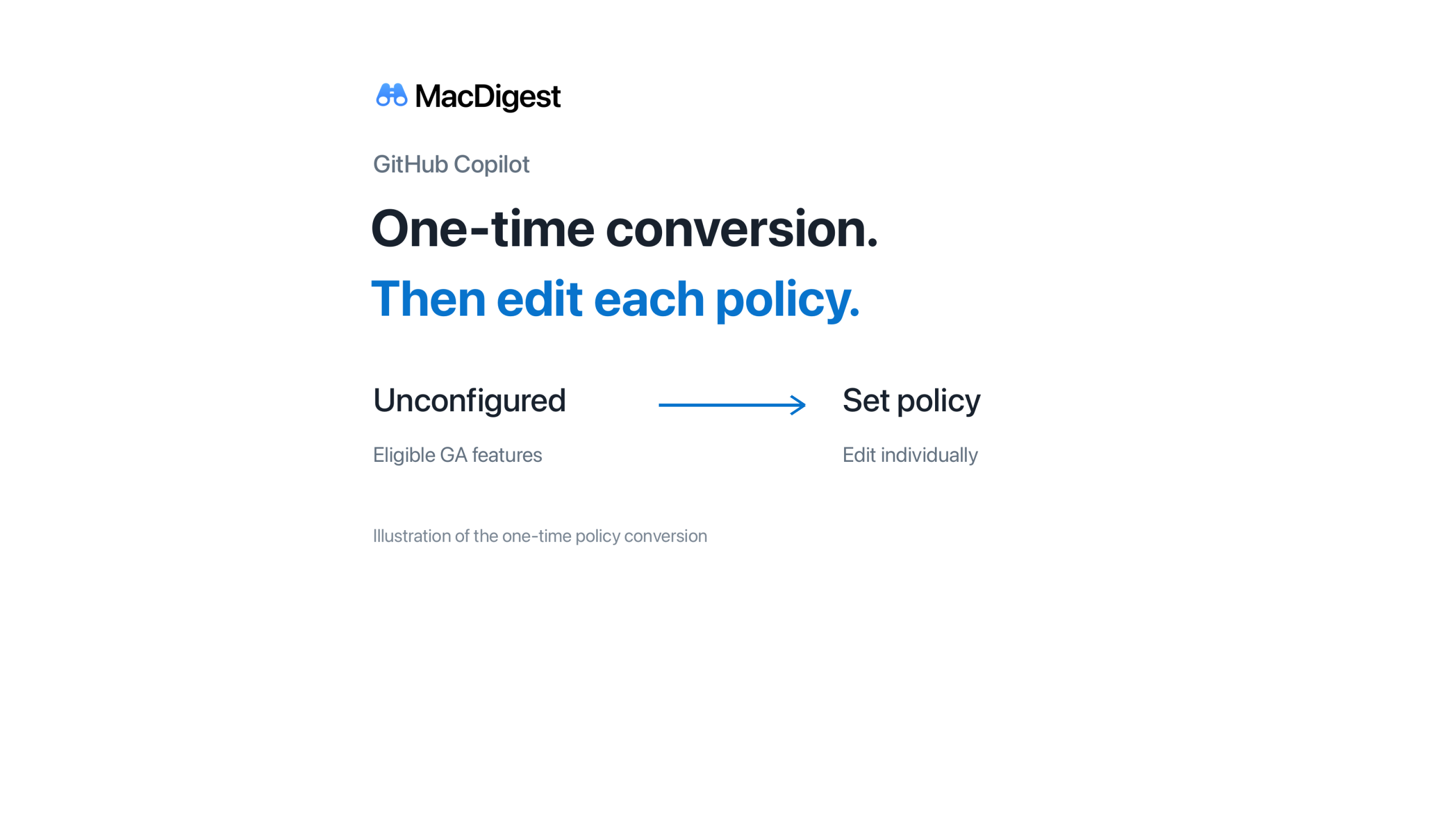
Under the October 22 announcement, eligible generally available features left Unconfigured receive the selected global setting once. Explicit feature choices survive the rollout, and previews remain opt-in.
The important distinction comes afterward: changing the global default does not rewrite feature policies that have already been set. Treat it as a starting rule, not a master switch that reverses the conversion.
GitHub’s default-availability guide says the feature policy is enabled by default. Leaving eligible entries unconfigured is therefore not a neutral decision. This is separate from the already-active model-default policy, and it does not mean every Copilot capability is being switched on.
Before rollout, choose; afterward, inspect
Before enforcement reaches your enterprise or organization, review AI Controls → Copilot → Default policy for new features. Check the banner counting eligible unconfigured policies, choose the intended default, and explicitly configure features where your requirements differ.
If the conversion has already happened, inspect the resulting individual settings and change those directly. Do not assume that disabling the global default will undo earlier enablement.
The guide still contains “not currently active” wording. For rollout timing, use the dated announcement: enforcement is gradual, not simultaneous across accounts.
Check who owns the decision
An organization’s default applies where the enterprise has delegated the choice and the organization has not explicitly configured the feature. An organization cannot override an enterprise-wide enabled or disabled policy. Its Settings → Copilot → Policies page is the place to inspect and edit available choices.
This is an administrative availability change, distinct from the client deployment and startup-policy changes we covered earlier. Review both separately: a client rollout plan is not a substitute for checking the policies users will inherit.